
Howzit, friends.
Enzo here. Farm Manager. Biscuit guardian. Occasional couch monopoliser.
Summer in Stellenbosch is a beauty. Long light, hot days, vines stretching lazily toward harvest. But she’s also a dangerous beauty. Dry grass, hot berg winds, and one careless spark can turn a peaceful valley into a furnace.
And while I can’t control what our neighbours get up to (looking at you…), I can control what happens on our patch.
That’s my job.
Building the Line
Fire doesn’t politely knock at the gate. It looks for fuel. So we make sure it doesn’t find any.
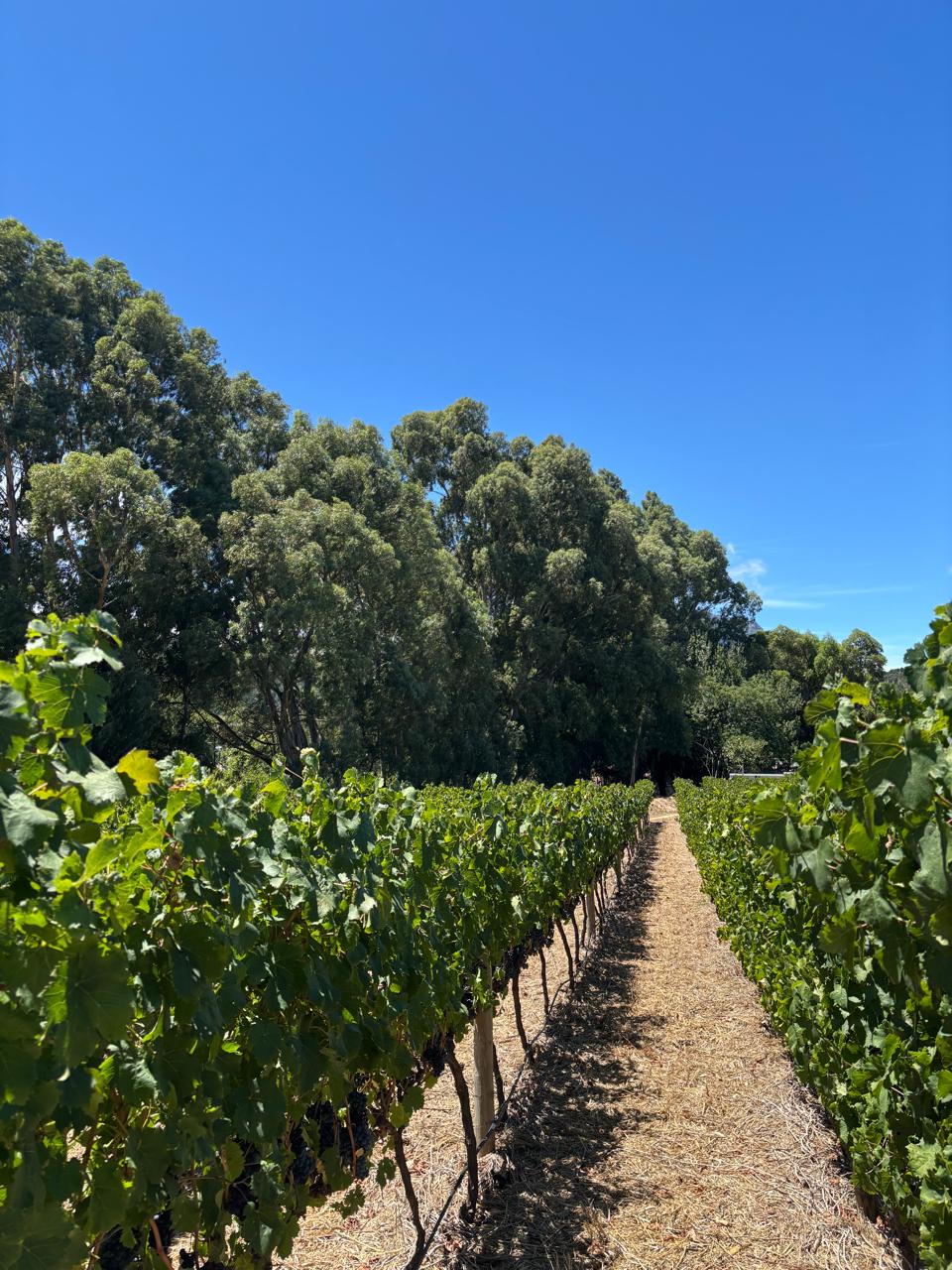
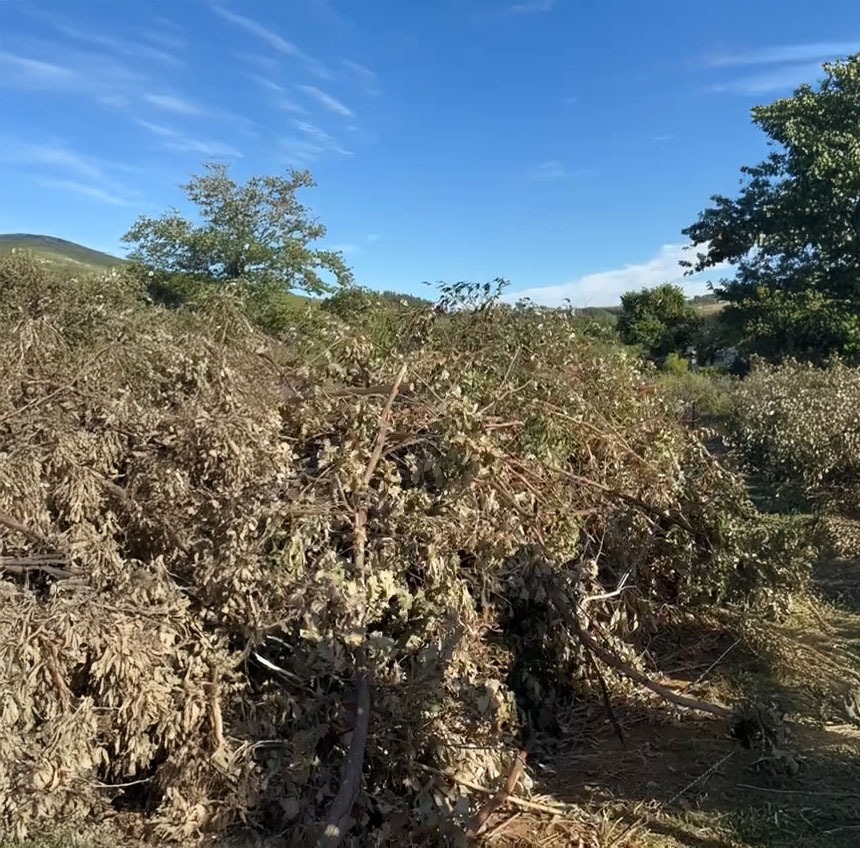
For the past three weeks, we’ve been working the perimeter, especially that clutch of blue gum trees in the corner. Beautiful giants, yes. But blue gums can burn like torches if left untamed.
So we cleared.
We cut.
We trimmed lower limbs.
We removed dead branches.
We brush-cut everything that could feed a flame.
Did You Know?
Blue gum (Eucalyptus) trees contain highly flammable oils.
In hot, dry conditions, these oils can make fires burn hotter and spread faster. Removing dead branches and trimming lower limbs eliminates what firefighters call “ladder fuels”, vegetation that allows flames to climb from the ground into the tree canopy.
Fire breaks aren’t glamorous work. They’re not romantic like harvest. They don’t smell like fermenting grapes or fresh soil after rain. But they matter. They’re quiet insurance policies written in sweat.
We can’t stop the threat of fire completely. That would be arrogance. But we can make it difficult. We can slow it down. We can protect what we’ve built.
Did You Know?
Firebreaks are designed to slow fires, not necessarily stop them.
By removing vegetation and fuel along a boundary, a firebreak reduces intensity and spread. That slowdown can make all the difference, protecting vineyards, farm buildings and neighbouring land, while giving firefighters time to respond. In many farming regions, maintaining firebreaks is also a legal requirement.
The Mountain Problem
Of course, when you remove fuel… you’re left with a mountain of it.
Branches. Shrubs. Undergrowth. Enough to build a small wooden castle.
So what do you do?
You bring in the mighty chipper.
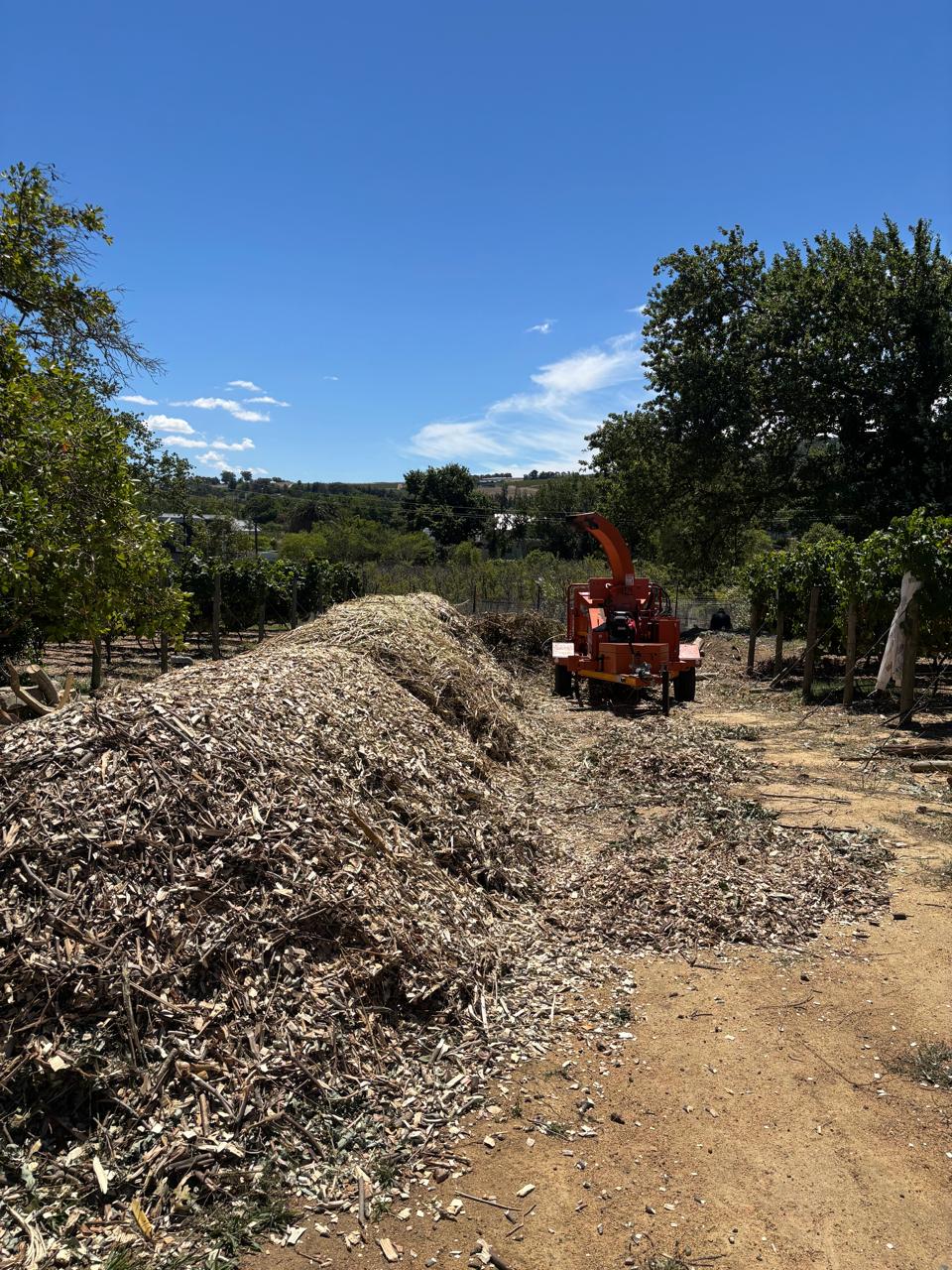
All paws (and hands) on deck. Feeding the beast from dawn to dusk. The machine roared, chewed, and spat out neat piles of woodchips where once there was chaos.
By the end of the day, the mountain was gone. In its place? A golden pile of chips — future mulch for the vineyard rows come winter.
Nothing wasted. Nothing burnt. Just transformed.
Did You Know?
Wood chipping reduces fire risk and improves soil health.
By chipping cleared vegetation instead of burning it, we remove a fuel source while creating mulch that helps retain soil moisture, regulate temperature, suppress weeds and slowly return organic matter to the soil. A hazard becomes a vineyard asset.
There’s something satisfying about this kind of work. It’s not flashy. It doesn’t come with applause. But it’s foundational.
On a farm, resilience isn’t loud. It’s practical.
It’s clearing before there’s smoke.
It’s trimming before there’s trouble.
It’s thinking ahead.
So while the summer sun keeps blazing and the valley hums with heat, know this:
Long Dog Farm is ready.
Fire might try its luck.
But we’ve made it work harder.
Until next time,
Enzo
Farm Manager at Long Dog Farm