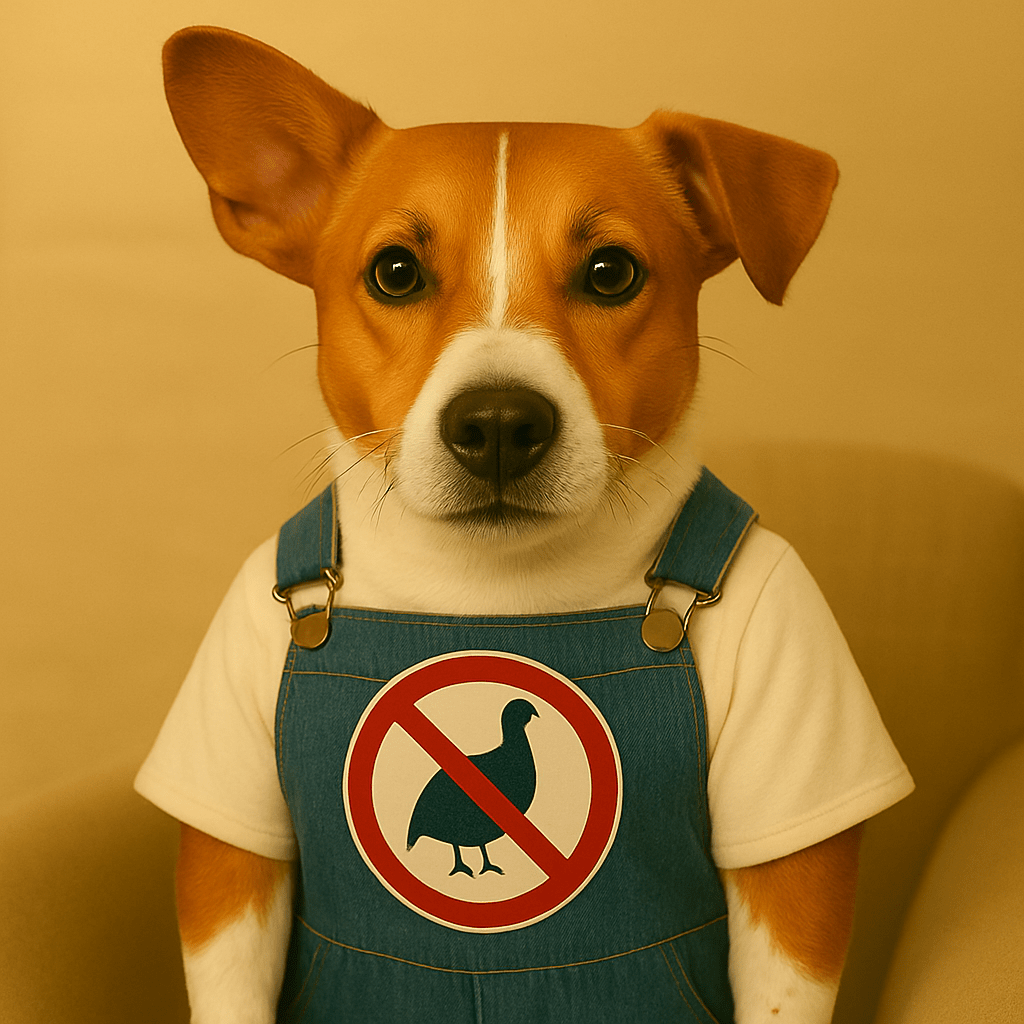
Right.
Let me explain something to you.
The grapes are nearly ready. The sugars are loaded. The Cabernet Franc is blushing beautifully, and if all goes to plan, we’ll be harvesting next week. The bunches are plump, deep in colour, and bursting with flavour. I’ve inspected them personally. Several times. For quality control purposes, obviously.
But here’s the problem.
When grapes reach peak sweetness, word spreads.
First come the guineafowl
An unruly, feathered mob. They march in like they own the place. They jump up, stretch those ridiculous necks, and peck off the ripest berries with absolutely no respect for the hard work that has gone into growing them.
We lose a shocking amount to those hooligans.
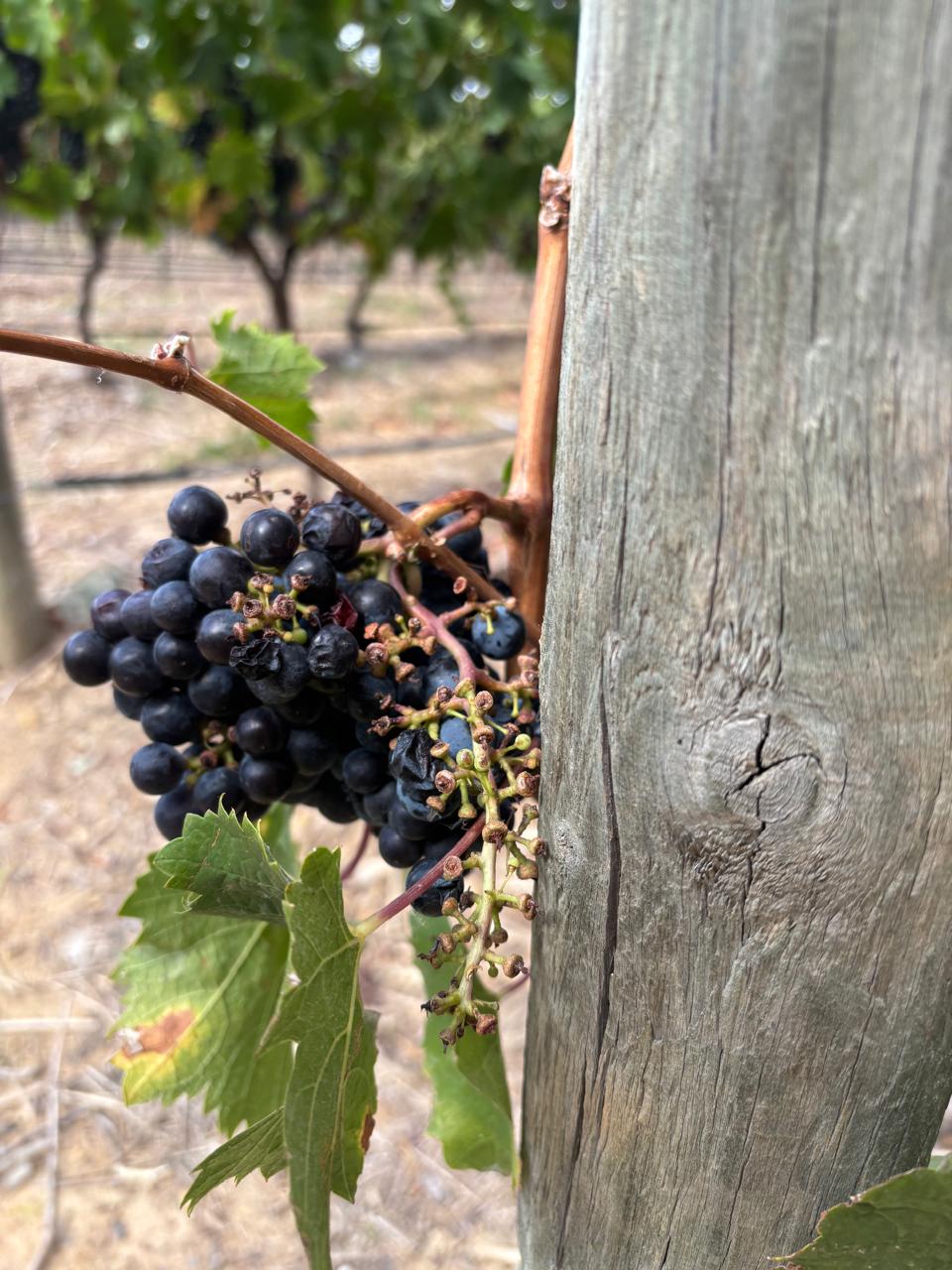
Did You Know?
Guineafowl have excellent eyesight.
They can spot ripening grapes from a surprising distance and are especially attracted to darker varieties like Cabernet Franc as sugar levels rise. Once they find a food source, they return in flocks, and they tell their friends.
My job?
Keep them out of the vineyard.
Which sounds simple… until you realise how many rows there are.
I clear one side, charging heroically down the block, and they all flap dramatically to the other side. I sprint there, ears back, paws flying… and they lift off again and land exactly where I just came from.
It is tactical warfare.
Then comes the aerial attack.
Bees.
Thousands of them.
Now listen, we respect the bees. They are vital. They make honey. They pollinate. They are small, organised geniuses. We need them. So we tread carefully.
But when sugar levels rise, they descend from above, land delicately on a grape, pierce the skin, and sip the juice like they’re at a vineyard tasting.
One grape. Fine.
Thousands? Not fine.
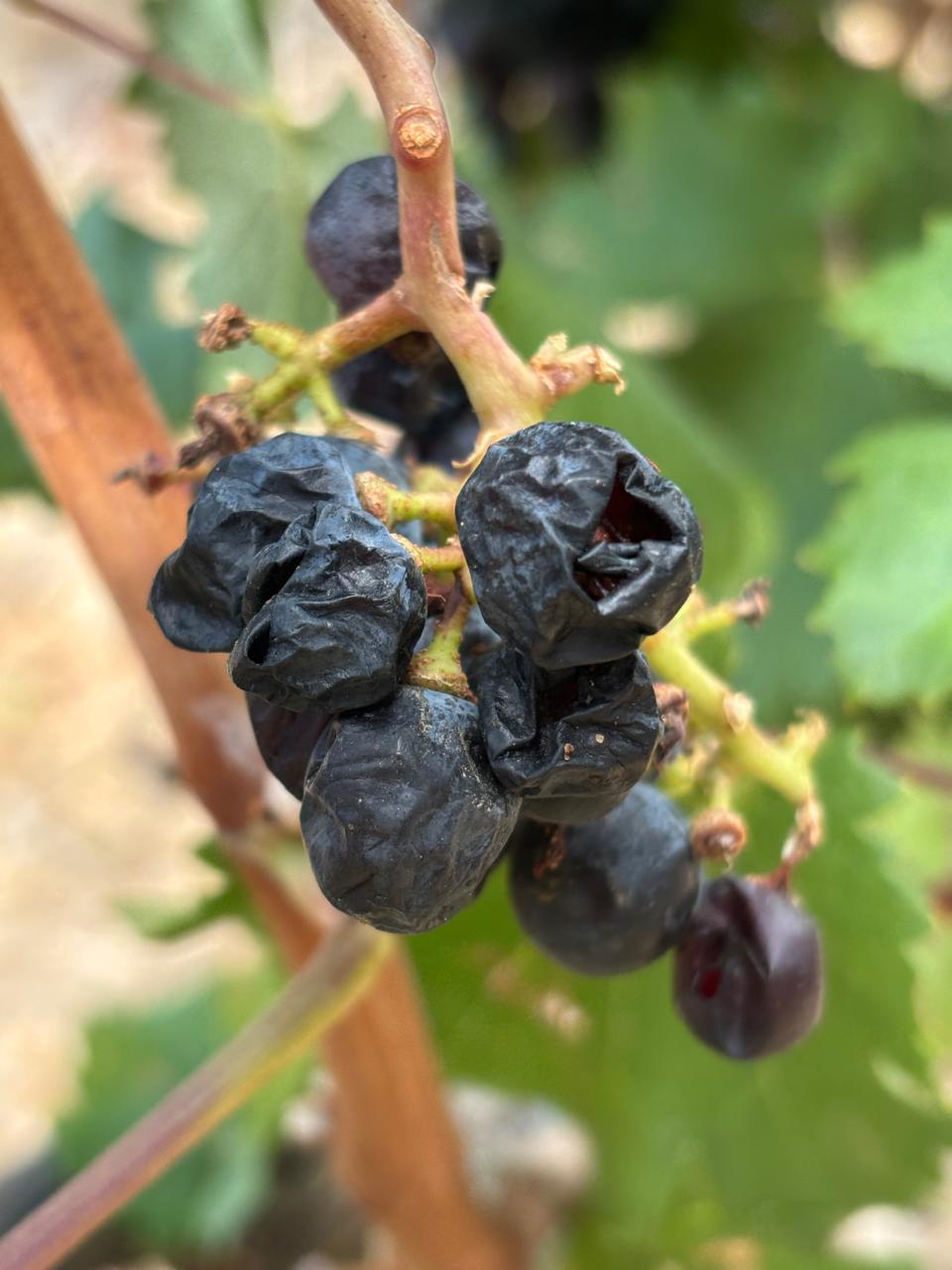
Did You Know?
Sugar levels determine harvest timing.
Winemakers measure grape sugar in degrees Brix. As sugars increase, potential alcohol levels rise, but wait too long, and pests (and even rot) can compromise the fruit. Timing harvest is a delicate balance between flavour, sugar, and vineyard protection.
You may think I am exaggerating.
But when you have hundreds of guineafowl and thousands of bees, the damage adds up. Birds I can chase. Birds I can intimidate. Birds understand a well-timed bark.
The bees?
We give up what we must to the bees.
The guineafowl, on the other hand…
IT.IS. WAR.
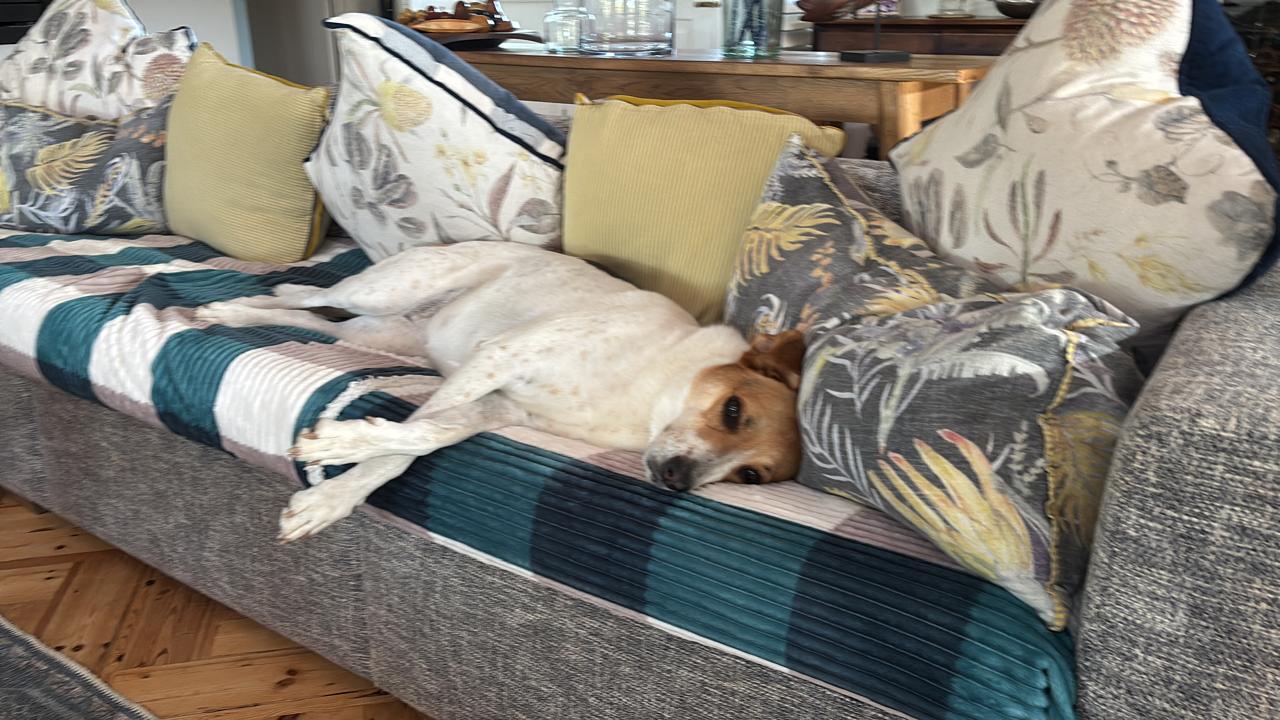
After a hard days run, a welcome rest
Did You Know?
Cabernet Franc ripens earlier than Tannat.
That’s why it’s often one of the first red varieties harvested in a season. It develops beautiful aromatics, think red berries, violets, and subtle herbs, but because it ripens earlier and builds sugar quickly, it becomes an irresistible target for birds just before picking time. Timing (and vigilant pest control) is everything.
Still, despite the skirmishes, the Cabernet Franc looks magnificent. Deep flavour. Balanced ripeness. Nearly time.
If you taste a hint of intensity in this year’s vintage, just know, it was earned.
By the vines.
By the team.
And mostly by me.
Yours in vigilance,
Nibby
Head of Pest Control, Defender of the Franc, Chaser of Birds